

Biscoff Custard Pie: A Southern Twist on a Classic Dessert
Crumb Crusts & Southern Custard Pies
Crumb crusts—made from graham crackers, vanilla wafers, or gingersnaps—first appeared in the late 1800s as a simple alternative to traditional pastry. By the early 1900s, chilled custard and icebox pies made them a Southern favorite: quick to press, easy to bake (or not at all), and perfect for creamy fillings. Companies even printed recipes on cracker boxes, cementing their place in home kitchens. Today, crumb crusts are a hallmark of Southern custard pies, offering sweet crunch and effortless charm in every slice.
Here’s some history of using crumb crusts in pies…
Early 1800s – Graham crackers were invented by Sylvester Graham as a health food; originally unsweetened and dense.
Late 1800s (1880s–1890s) – Early cracker crumb crusts appear in American cookbooks; made from crushed crackers, sugar, and butter. Used primarily for simple custard pies.
Early 1900s – Icebox pies gain popularity. Crumb crusts are perfect for chilled custard and pudding pies, requiring little baking and handling.
1920s–1930s – Commercial promotion: Graham cracker and cookie companies print recipes for crumb crusts, spreading their use across the U.S., especially in the South.
Mid-20th century – Crumb crusts become a Southern staple, commonly paired with custard pies, lemon pies, lime pies, and cream pies.
Today – Graham cracker, vanilla wafer, and gingersnap crusts are standard for custard and chilled pies, celebrated for their simplicity, texture, and flavor contrast.
Now, here’s some history of custard pies…
The Sweet History of Custard Pies in Louisiana
When it comes to Southern desserts, custard pies hold a special place—simple, comforting, and deeply tied to tradition. But in Louisiana, these humble pies carry a story all their own, shaped by centuries of culture, climate, and creativity.
From Europe to the Bayou
Custard pies came to America with European settlers, who brought recipes from France, England, and Germany. At their heart, custard pies are deceptively simple: milk or cream, eggs, sugar, and a buttery crust. In the colonial South, they became everyday desserts because these ingredients were abundant on farms, and the pies baked well in simple hearth ovens.
Louisiana, though, added its own twist. French settlers in New Orleans introduced egg-rich custards and techniques for smooth, silky fillings. Cajun and rural communities adapted those recipes using what they had on hand: fresh milk, farm eggs, and pantry staples. The result? Custards that were practical, comforting, and distinctly Southern.
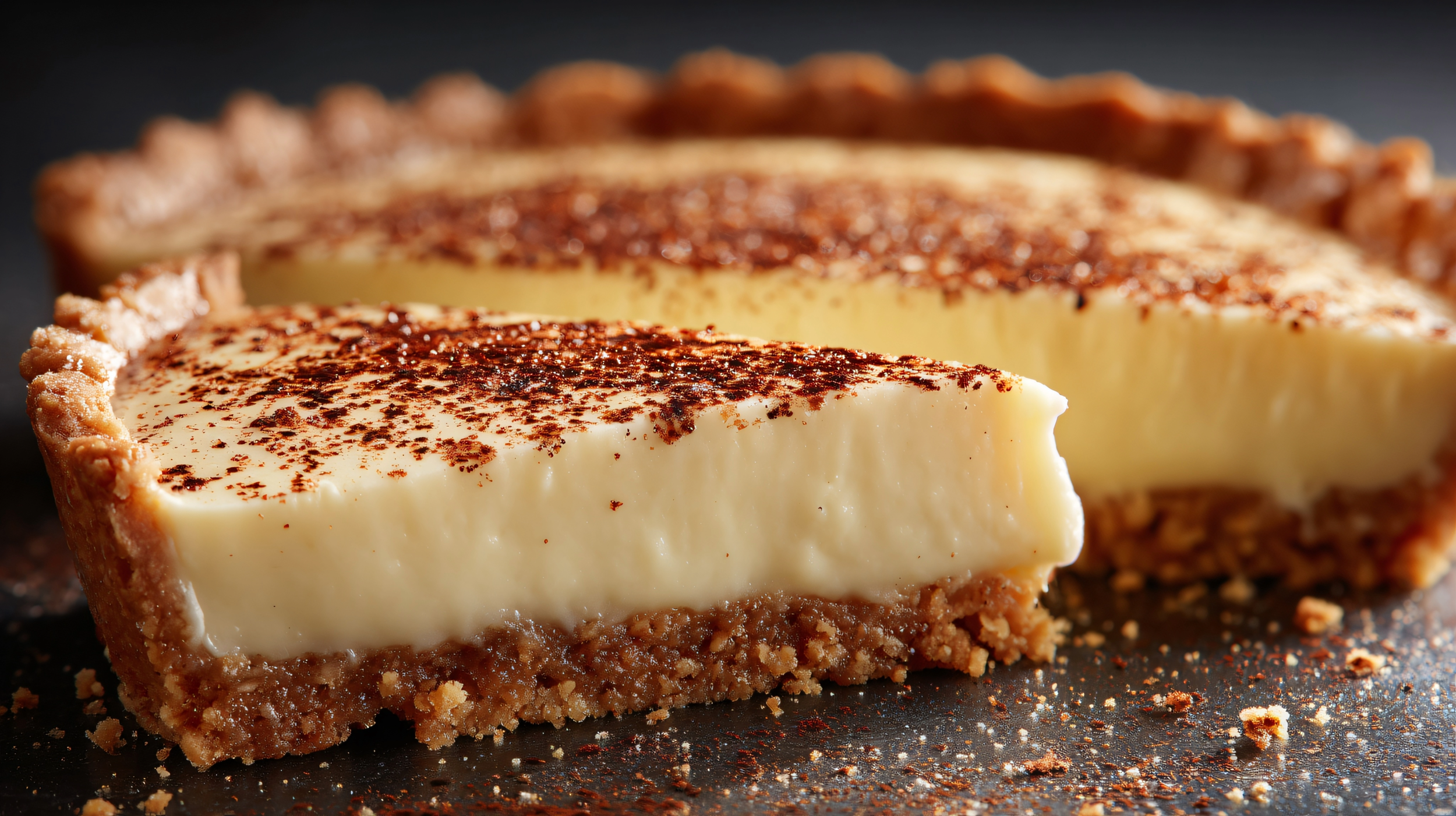
There’s something timeless about a slice of egg custard pie. With its creamy, velvety filling and lightly spiced nutmeg aroma, it’s the kind of dessert that feels like home in every bite. In Louisiana, this humble pie has been a staple for generations, blending French custard techniques with Southern practicality. Today, I’m sharing a classic version that’s simple to make, yet rich in flavor—perfect for family dinners, holidays, or anytime you crave a taste of tradition.
This Biscoff custard pie has a spiced, buttery cookie crust, a smooth vanilla egg custard, and a hint of nutmeg.
I. Biscoff Cookie Crust
The base provides a caramelized, crunchy contrast to the creamy filling.
Ingredients:
1 sleeve (8.8 oz / 250g) Biscoff cookies (approx. 32 cookies).
5–6 tablespoons unsalted butter, melted.
¼ teaspoon kosher salt.
Instructions:
Pulse: Grind cookies in a food processor until they reach a fine, uniform crumb.
Mix: Combine crumbs, melted butter, and salt in a bowl until the mixture feels like wet sand.
Press: Firmly press the mixture into the bottom and up the sides of a 9-inch pie dish.
Bake: Pre-bake at 350°F (175°C) for 8–10 minutes until fragrant. Cool completely before filling.
II. Vanilla Custard Filling
This traditional egg custard is simple and pairs well with the spiced crust.
Ingredients:
3 large eggs, room temperature.
½ cup granulated sugar.
2 cups whole milk.
1 teaspoon vanilla extract.
¼ teaspoon ground nutmeg (optional garnish).
Instructions:
Whisk: In a large bowl, whisk eggs, sugar, and salt until smooth.
Combine: Gradually stir in the milk and vanilla extract.
Bake: Pour the mixture into the cooled Biscoff crust. Bake at 350°F (175°C) for 45–50 minutes.
Set: The pie is done when the center is set but still slightly jiggly. Cool completely, then refrigerate for at least 4 hours to fully set.
III. Tips for Success
Prevent Soggy Crust: To keep the Biscoff base crisp, you can brush the pre-baked crust with a beaten egg white and bake for 2 additional minutes before adding the liquid custard.
Avoid Cracks: Do not overbake; the custard will continue to firm up as it cools.
Serving: Top with a dollop of whipped cream and a sprinkle of extra crushed Biscoff cookies just before serving.